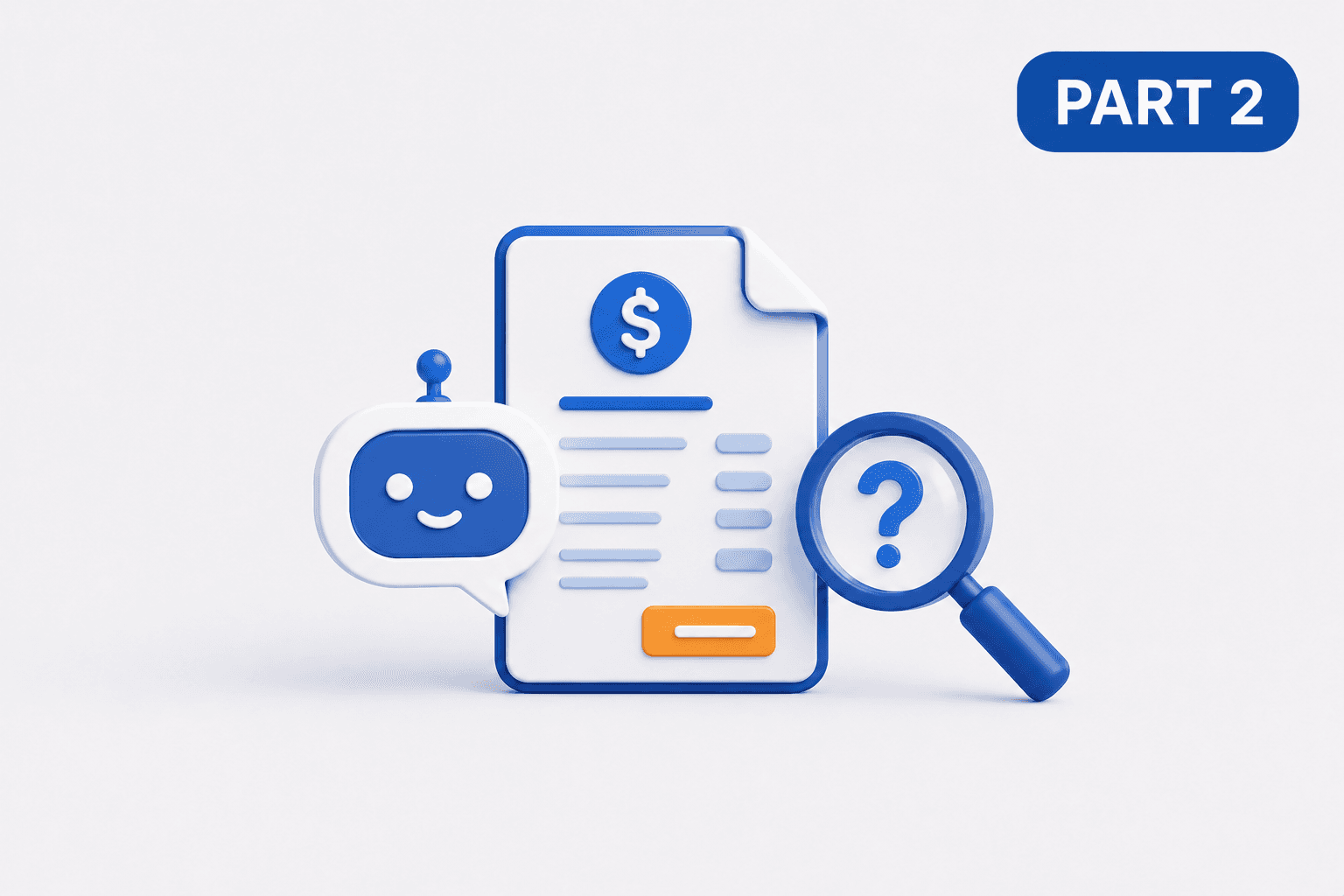
The answer is simple: AI can help explain one of the most confusing parts of healthcare—your medical bill.
Rather than replacing healthcare professionals or insurance companies, AI serves as an educational tool that helps translate complex billing information into language consumers can more easily understand.
Why Medical Bills Are So Confusing
Medical bills are notoriously difficult to understand. Even people who work in healthcare often struggle to interpret every line. Understanding a medical bill often requires interpreting information from multiple organizations, each with its own billing systems, coding standards, and reimbursement processes.
A single outpatient visit can generate multiple bills from different organizations:
- The physician
- The hospital
- The laboratory
- The radiologist
- The anesthesiologist
- Your insurance company
Each uses its own billing system, reimbursement rules, and contractual agreements. As a result, medical bills combine several layers of information:
- CPT Codes: Procedure codes that describe what service was performed
- HCPCS Codes: Codes for supplies, drugs, and certain outpatient services
- ICD-10 Diagnosis Codes: Codes that describe why the service was performed
- Modifiers: Indicators that clarify how or where a service was performed
- Revenue Codes: Hospital billing categories (e.g., imaging, emergency room, surgery)
- Facility Fees vs. Professional Fees: Hospitals charge facility fees; clinicians charge professional fees
- Contractual Adjustments: Reductions based on your insurer's negotiated rate
- Explanation of Benefits (EOB): A document from your insurer explaining what was billed, what was allowed, and what you owe
This complexity is why consumers often feel overwhelmed. AI helps by translating this information into plain language.
How AI Translates Healthcare Language
AI excels at translation. It can convert unfamiliar billing terminology into understandable explanations.
Example 1: CPT Code Translation
Instead of: CPT 73721
AI explains: MRI of the knee without contrast
Example 2: Adjustment Code Translation
Instead of: CO-45
AI explains: Your insurance reduced the charge to the contracted network rate
Example 3: Facility vs. Professional Charges
Instead of: Two separate bills for the same visit
AI explains: One bill is from the hospital (facility fee). The other is from the clinician (professional fee)
AI does not change the bill—it makes the bill understandable.
What AI Cannot Do
AI is powerful, but it has clear limitations:
- Cannot see your remaining deductible
- Cannot see your employer's benefit design
- Cannot see pending claims
- Cannot see unpublished insurer contracts
- Cannot determine medical necessity
- Cannot predict future claim decisions
- Cannot override insurance rules
- Cannot calculate your exact out-of-pocket cost
AI can only interpret the information you provide. It does not access your medical records, insurance portal, or protected health information. AI can explain your bill. AI cannot finalize your bill.
Consumer Checklist: Questions to Ask AI Before a Procedure
Before your appointment, you can ask AI:
- What is CPT 73721?
- What questions should I ask my provider?
- Is this outpatient or inpatient?
- Is there a facility fee?
- Is there an ambulatory surgery center (ASC) nearby?
- Is this preventive or diagnostic?
- What is the difference between facility and professional charges?
- What should I ask my insurer before scheduling?
- Is this service covered by my insurance?
- Is prior authorization required?
- Are there lower-cost facilities in my network?
AI helps you prepare—not predict.
Frequently Asked Questions (FAQ)
Can AI read my medical bill?
Yes. AI can interpret medical terminology, explain billing codes, and summarize charges in plain language. It can only analyze the information you provide.
Can AI tell me exactly what I'll owe?
No. Your final cost depends on your deductible, coinsurance, network status, and employer benefits—information AI cannot access.
Can AI identify billing errors?
AI can identify questions, not errors. Only your provider or insurer can confirm whether a charge is incorrect.
Is AI replacing medical billing staff?
No. AI supports billing staff by translating terminology and identifying inconsistencies, but humans perform coding, documentation, and claim review.
Is my medical information safe to upload to AI?
Use trusted tools, remove personal identifiers, and understand the privacy policies of any service you use.
Can AI explain my Explanation of Benefits (EOB)?
Yes. AI can help explain common terms found on an Explanation of Benefits (EOB), including allowed amounts, contractual adjustments, deductibles, copayments, coinsurance, and patient responsibility. However, AI cannot verify whether an insurer processed a claim correctly or determine your final financial responsibility.
Key Takeaway
Medical bills are among the most complex financial documents most people will ever receive. AI cannot replace healthcare professionals, insurance representatives, or billing specialists—but it can help translate unfamiliar terminology, explain billing concepts, and organize complex information into language that is easier to understand.
Important Disclaimer
The information provided in this article is for educational and informational purposes only and should not be construed as medical, legal, financial, insurance, or reimbursement advice. While every effort has been made to ensure the accuracy of the information presented, healthcare laws, regulations, insurance benefits, reimbursement methodologies, and pricing practices are subject to change and may vary by federal and state requirements, payer contracts, healthcare providers, employer-sponsored health plans, and individual circumstances.
Readers should consult their healthcare provider, health insurance company, employer-sponsored health plan administrator, or other qualified professionals regarding questions specific to their individual healthcare coverage, treatment decisions, or financial responsibilities.