Why 2026 Is Different
Every January brings healthcare updates, but 2026 is different. Payers are tightening claim edits, Medicare is shifting payment structures, documentation standards are rising across the board, and CMS is rolling out the most significant upgrade to hospital price transparency since the original rule took effect in 2021.
For patients, these changes promise something long overdue: pricing data based on real payments instead of estimates. For providers — especially smaller practices — they raise the compliance bar. Small mistakes like the wrong place-of-service code, a missing modifier, or a symptom documented during a preventive visit can now trigger instant denials, delayed payments, and frustrated patients.
At ExploreCarePricing, we track these changes so you do not have to. Below is your guide to the biggest changes shaping 2026 — what the new transparency rule really requires, what else is changing, and the steps to take now to stay ahead.
The Headline Change: CMS Strengthens the Price Transparency Rule
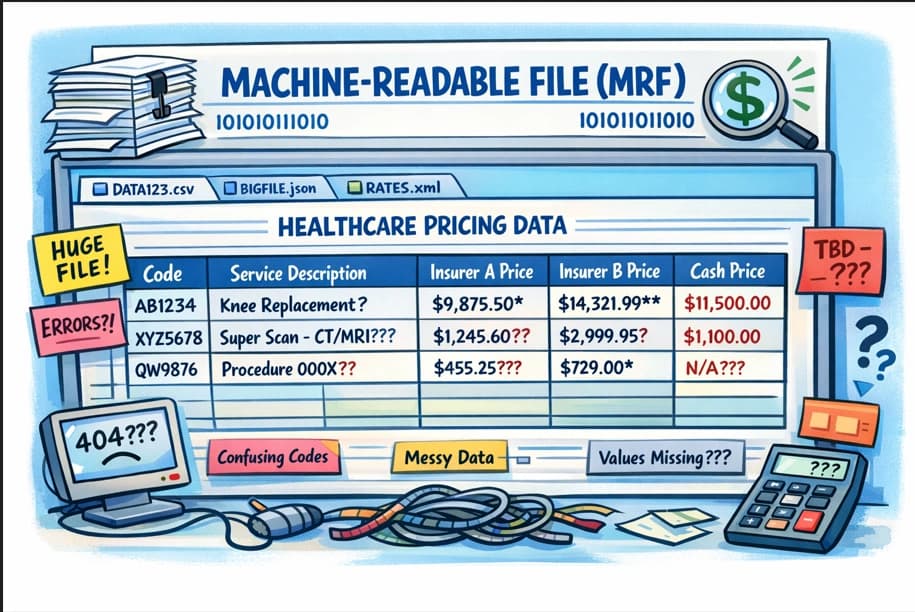
Starting in 2026, CMS is changing what hospitals must post online in their Machine-Readable Files (MRFs) — the public files that show what hospitals charge and what insurance companies actually pay. The goal is simple: make these numbers more honest, more clear, and based on real payments, not guesses.
What Hospitals Must Now Publish
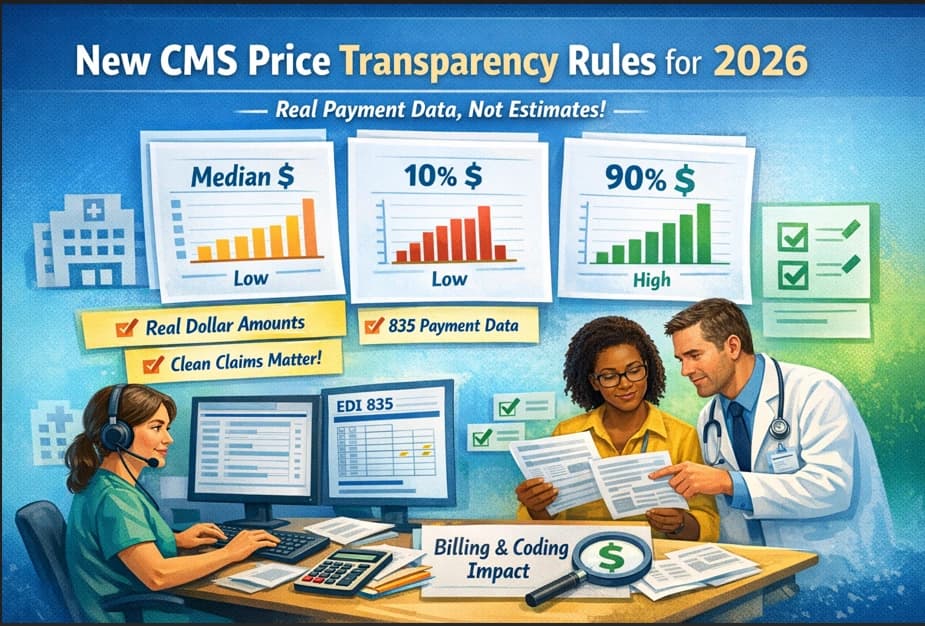
Under the strengthened rule, hospitals must post real dollar amounts derived from actual past insurance payments, including:
- The median (middle) amount actually paid by each insurer for each service
- The 10th percentile of payments — the lower end of what a service actually settles for
- The 90th percentile of payments — the upper end of real-world payment amounts
- A count of the claims used in the calculation, so users can judge how reliable the number is
This is a major shift. Under the original 2021 rule, many hospitals posted vague "estimated allowed amounts" or algorithm-placeholder values that were nearly impossible for consumers or researchers to use.
Why This Matters
- For patients: published prices will finally reflect what care actually settles for — making comparison shopping meaningfully more accurate
- For employers and researchers: percentile data reveals the true spread of negotiated rates in each market
- For hospitals and providers: the compliance burden rises, and CMS has signaled increased enforcement and civil monetary penalties for incomplete files
- For transparency tools like ExploreCarePricing: cleaner, standardized data means better side-by-side comparisons for consumers
Beyond Transparency: The Other 2026 Changes to Prepare For
Part 1: Coding & Billing Updates
- ICD-10-CM refresh: Over 400 code changes are live for 2026. Practices should review their top 20 most-used codes for revisions, deletions, and new specificity requirements.
- Tighter payer edits: Commercial payers are expanding automated claim edits. Mismatched place-of-service codes and missing modifiers that slipped through in prior years are now instant denials.
- Preventive visit documentation: A symptom documented during a preventive visit can reclassify the encounter and shift costs to the patient — precise documentation matters more than ever.
Part 2: Medicare Payment Shifts
Medicare continues moving payment structures toward site-neutral and value-based arrangements, changing reimbursement math for hospital outpatient departments and physician practices alike.
Documentation standards are rising in parallel — payment integrity reviews increasingly demand records that support both medical necessity and the exact code billed.
Part 3: What Patients Should Watch
- Expect more accurate price estimates when you shop for care — and ask facilities for their MRF-based figures if an estimate seems off.
- Watch your preventive care visits: understand what turns a free screening into a billable diagnostic service.
- Use your Good Faith Estimate rights under the No Surprises Act for scheduled, non-emergency care.
Your 2026 Readiness Checklist
For Providers and Practice Teams:
- Audit your top 20 codes against the 2026 ICD-10-CM changes before claims start denying.
- Review payer bulletins for new edit rules — especially place-of-service and modifier requirements.
- Tighten preventive-visit documentation workflows so symptom notes do not silently reclassify encounters.
- If you are hospital-affiliated, verify your MRF meets the new percentile and claims-count requirements.
- Track denial patterns monthly; 2026 edits will surface problems fast, and early trends are your warning system.
For Patients and Families:
- Before scheduled care, look up the median paid amount for your procedure using transparency data or ExploreCarePricing.
- Request a written Good Faith Estimate for non-emergency services.
- Compare the final bill against both the estimate and the published data — and question discrepancies.
Key Takeaways
- 2026 brings the biggest strengthening of hospital price transparency since 2021 — published prices must now reflect real payments (median, 10th/90th percentiles, claim counts)
- Payer claim edits, ICD-10-CM updates, and Medicare payment shifts raise the compliance bar for providers at the same time
- Small documentation and coding mistakes now carry immediate financial consequences
- Patients gain more accurate shopping data — and should use it before scheduling care
- Preparation now (code audits, documentation workflows, denial tracking) prevents expensive surprises later
Frequently Asked Questions
Q: What exactly changes in hospital price files in 2026?
A: Hospitals must publish actual payment-based figures — the median amount paid by each insurer, the 10th and 90th percentile amounts, and the number of claims behind each calculation — replacing vague estimated values.
Q: Does the 2026 rule apply to all hospitals?
A: The federal price transparency rule applies to essentially all licensed hospitals in the United States. Enforcement, audits, and penalties are handled by CMS.
Q: I am a patient. How does this help me?
A: Published prices will better reflect what care actually costs, making comparisons between facilities more trustworthy. Tools that organize this data become significantly more accurate.
Q: I run a small practice. Where do I start?
A: Start with the coding audit: review your top 20 ICD-10-CM codes against the 2026 changes, then review your major payers' new edit rules. These two steps prevent the most common denials.
Q: Will prices themselves go down because of this rule?
A: Transparency alone does not lower prices, but evidence suggests that exposing negotiated-rate variation increases competitive pressure over time, especially in shoppable service categories.
Q: What happens if a hospital does not comply?
A: CMS can issue corrective action requests and civil monetary penalties, which scale with hospital size. Enforcement activity has increased each year since the rule took effect.
References & Further Reading
- Centers for Medicare & Medicaid Services. Hospital Price Transparency requirements and 2026 updates. https://www.cms.gov/priorities/key-initiatives/hospital-price-transparency
- Centers for Medicare & Medicaid Services. ICD-10-CM 2026 code updates. https://www.cms.gov/medicare/coding-billing/icd-10-codes
- Centers for Medicare & Medicaid Services. No Surprises Act consumer resources. https://www.cms.gov/nosurprises


Important Disclaimer
This article is provided for general educational and informational purposes only and does not constitute medical, financial, legal, coding, or insurance advice. Healthcare regulations, payment policies, and coding requirements change over time and vary by payer, state, and provider circumstances. Providers should verify current requirements directly with CMS and their payers; patients should consult their healthcare provider and insurance company before making healthcare or financial decisions.
About the Authors
Rachel Wrought, LPN, SHM, MHI, Founder & CEO of ExploreCarePricing, brings over 18 years of healthcare experience spanning clinical nursing, healthcare operations, regulatory compliance, healthcare technology, and healthcare innovation. With a Master of Healthcare Innovation from Arizona State University, Rachel is dedicated to empowering patients and providers with clear, actionable information about healthcare costs and regulations. This article was developed with the ExploreCarePricing Team, whose analysts research and organize healthcare pricing and policy information to make it clear and usable for consumers.